
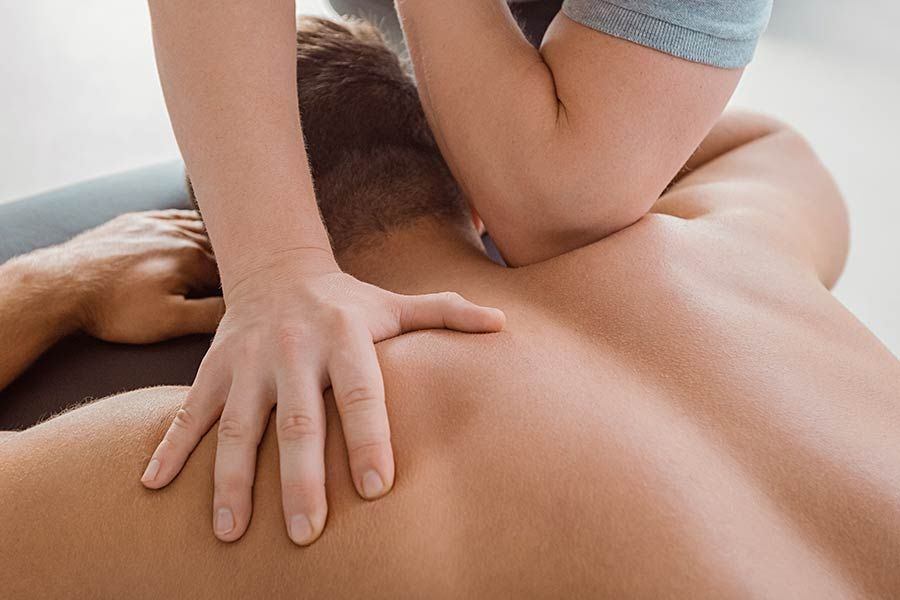
Therapeutic massage, sometimes called medical massage, is frequently paired with chiropractic care. The two approaches complement each other, and many patients receive them as part of the same treatment plan.
Common Types of Therapeutic Massage
The best massage approach for a given patient depends on factors such as the condition being treated, how sensitive the person is to touch and whether lying down or sitting is more comfortable. Chiropractors and massage therapists typically consider these factors together when choosing a technique. No single method suits everyone, and many therapists specialize in particular styles. Several widely used techniques are described below.
Swedish Massage
A Swedish massage typically starts with long, light, flowing strokes known as effleurage, which help warm the tissues. Once the muscles are warmed, the therapist moves on to deeper kneading pressure, called petrissage. Swedish massage is popular for relaxation and may also help improve circulation and flexibility. Some research suggests it may help lower levels of the stress hormone cortisol and may have positive effects on immune function.
Lymphatic Drainage
Lymphatic drainage is often used to help reduce swelling, also called edema. The therapist uses gentle, steady pressure and rhythmic strokes directed toward the heart to help move lymph fluid. This technique is also commonly used for swelling related to damaged or surgically removed lymph nodes.
Trigger Point Therapy
Trigger points, often described as muscle "knots," are tender spots where muscle fibers have tightened into a small band. They are among the most frequent muscle complaints. In a trigger point session, the therapist locates these areas and applies focused, sustained pressure to help them release. Some tenderness during treatment is common.
Chair Massage
Many massage techniques can be performed with the patient either lying down or sitting. In chair massage, the patient stays seated throughout the session in a chair designed specifically for massage. Lotions and oils are usually not used, and patients generally remain fully clothed.
What a Therapeutic Massage Session Involves
Massage in a chiropractic setting may feel different from a spa massage. It usually has a specific structural or functional goal and concentrates on particular areas of the body. The chiropractor, massage therapist and patient typically decide together which techniques to use and how long sessions should last. Before the first visit, the patient may be asked to complete forms describing areas of tension and general health history. The therapist will usually ask whether light, medium or firm pressure is preferred, and patients are encouraged to speak up at any point if they would like more or less pressure. Mild soreness for a day or so afterward is not unusual, and drinking water and moving gently may help.
Research on massage has explored possible benefits for a range of conditions, and many patients find that adding therapeutic massage to chiropractic care helps them feel better. Because so many techniques are available, a careful assessment of the patient's concerns can help the chiropractor and therapist choose the approaches most likely to support better movement and function. People interested in therapeutic massage may want to discuss with their chiropractor or healthcare provider whether it could fit into their care.