
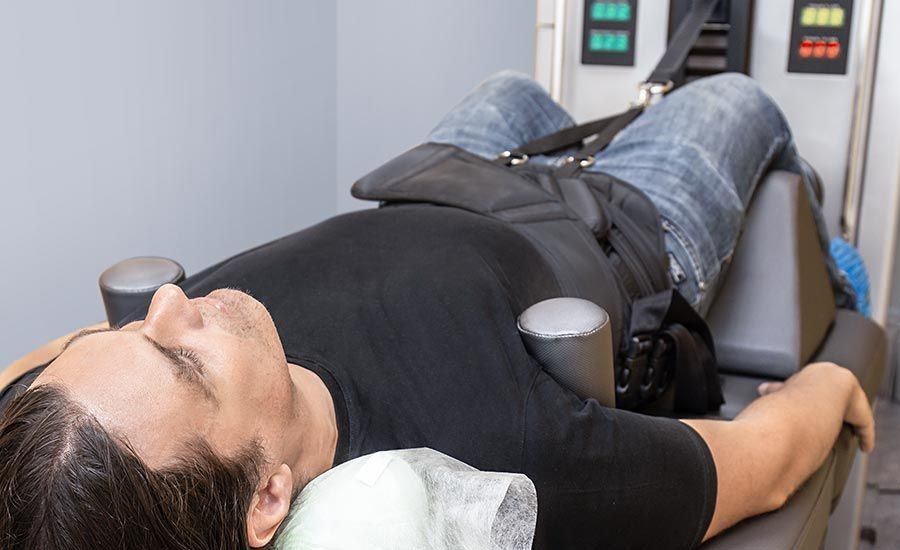
Mechanical spinal decompression is a therapy chiropractors commonly use to increase the space between vertebrae, stretch surrounding muscles and relieve pressure on nerves or the spinal cord. It is also known as vertebral axial decompression, spinal traction or axial traction. The treatment is non-invasive and usually painless.
How the Spine Is Involved
The spinal, or vertebral, column is a strong, stable stack of bones called vertebrae that surrounds and protects the spinal cord. A cartilage disc sits between each pair of vertebrae. Nerves branch off the spinal cord and pass through small openings, called foramina, on the sides of the vertebrae before traveling to the rest of the body. These nerves sense temperature and body position, send signals to muscles, and produce pain when they are irritated, injured or damaged. Throughout the day, gravity and movement compress the spine, pressing small amounts of fluid out of the discs. During rest at night, the discs take fluid back in. A kitchen sponge offers a useful comparison: when damp, it is soft and cushions impact; squeezing it pushes water out, and when a dry sponge is placed in water, it quickly soaks it up and expands. Spinal discs behave in a similar way.
Spinal decompression mainly targets the discs and nerves. In a healthy spine, the vertebrae and discs line up in a smooth curve, leaving ample room for the nerves that pass between them. Over time, or as a result of injury, degeneration or inflammation, discs can lose height. This may compress nearby nerves and lead to pain, muscle weakness or changes in sensation. In these situations, the discs may benefit from extra room to rehydrate and to restore space for the exiting nerves. Spinal decompression uses gentle traction to slightly separate the vertebrae, which is thought to encourage water, oxygen and nutrients to flow back into the discs.
What a Spinal Decompression Session Feels Like
Most people describe spinal decompression as a gentle but firm stretch through the neck or lower back, depending on the area being treated. For lower back treatment, for example, a harness is typically fastened around the abdomen just above the hips, and a cushion or small stool may be placed under the legs. The harness should feel snug and secure while still allowing comfortable breathing. As the traction begins, the whole body may shift slightly for a few seconds before a gentle pull is felt in the lower back. Patients are monitored throughout the session, and the therapy should not be uncomfortable. Some chiropractors also use a flexion-distraction table, which bends the body gently in a repeated rhythm to open the spaces between the vertebrae. People considering spinal decompression may want to ask a chiropractor whether it is appropriate for their condition.