
The spine and the spinal cord inside it are central to how the human body is built and how it operates. A healthy, well-functioning spine supports everything from tying a shoe to competing in demanding sports. When a problem develops, even simple daily tasks can become difficult or painful. Learning how the spine is put together, and what helps keep it healthy, can make a real difference in staying active over a lifetime.
Many health professionals focus on a particular body system, and chiropractors are no exception. Their education centers on anatomy and biomechanics, with particular attention to the spine. The sections below describe the main parts of this remarkable structure.
The Spinal Cord
Running down the inside of the spinal column is the spinal cord, a long, rope-like bundle made up of millions of nerve fibers. Together with the brain, it forms the central nervous system, which coordinates nearly everything the body does. The spinal cord carries messages from the brain out to the muscles, making movement possible, and relays information from the body back to the brain, such as touch, temperature and pain.
The Spinal Column and Vertebrae
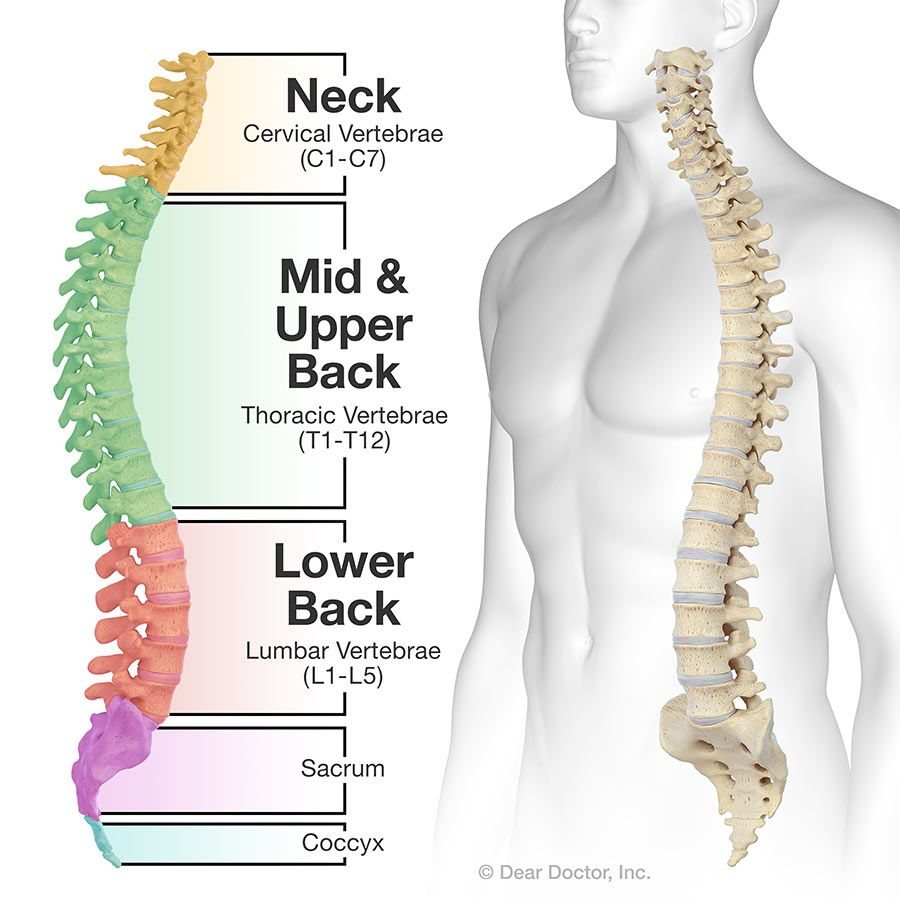
The spinal column is made up of 26 stacked bones known as vertebrae. These bones serve two purposes at once. They shield the delicate spinal cord, and they form a flexible framework that lets people sit, stand, twist, bend and reach. If injury, illness, inactivity or aging reduces the spine's flexibility, pain in the back, neck or elsewhere may follow, along with reduced ability to move.
Viewed from the side, a healthy spine has a gentle "S" shape. These curves help spread body weight evenly and absorb stress. Each curve balances the others, adding both stability and flexibility.
The upper portion of the "S" is the cervical spine, made up of seven neck vertebrae that curve slightly inward. Because relatively few muscles support the weight of the head, this region allows a wide range of motion but is vulnerable to sudden, forceful movements such as those that cause whiplash.
Below the neck, the 12 vertebrae of the thoracic spine curve outward through the upper and middle back. These vertebrae attach to the ribs, so this region moves less than the neck or lower back.
The lumbar spine, or lower back, curves inward again. It carries much of the body's weight, which helps explain why lower back pain is so widespread. Five lumbar vertebrae are typical, although some people are born with an extra one.
At the base of the spine sits the pelvis, which includes the sacrum, the coccyx (tailbone) and the hip bones. These structures share the load of the upper body and play an important role in sitting, standing and walking.
Healthy spinal curves support good balance and may lower the likelihood of future neck and back problems. Chiropractors often evaluate these curves as part of assessing a patient's risk of spinal injury or degeneration. Curves can become abnormal for a variety of reasons. Scoliosis, a sideways curve, may develop during childhood or adolescence, while habits such as slouching or hunching over phones and computers may gradually alter the spine's natural shape.
Discs and Vertebral Openings
Each pair of neighboring vertebrae forms an intervertebral joint, with a soft, round disc sitting between the two bones. During an exam, chiropractors typically check these joints for proper alignment and normal movement.
Spinal discs are roughly half an inch thick and act as cushions, absorbing shock and allowing the spine to bend and rotate. Each disc has a gel-like core that provides flexibility and resilience, surrounded by a tough, elastic outer ring that holds the core in place. As people age, the discs tend to lose height, which is one reason many adults become slightly shorter over time.
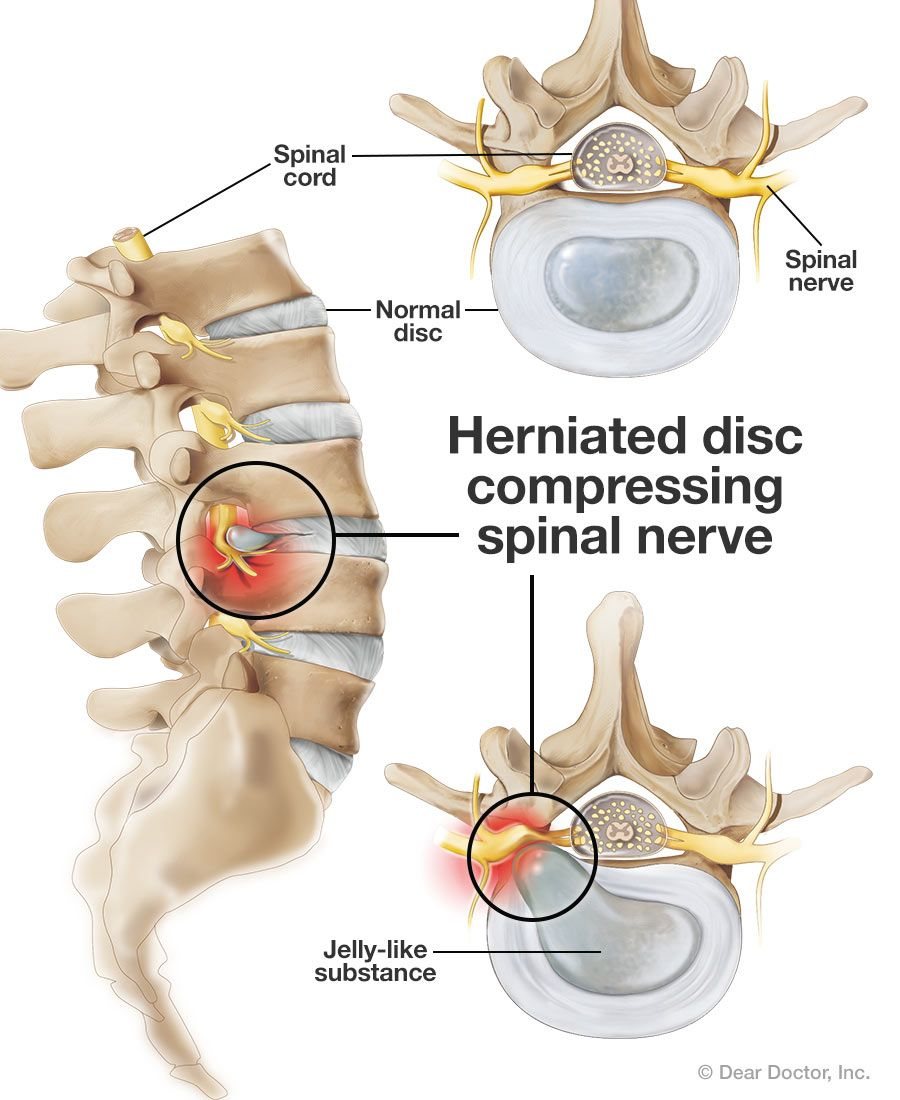
Heavy strain or long-term wear can cause the outer ring of a disc to tear, allowing some of the inner material to push out toward the spinal canal. This is known as a herniated, or "slipped," disc. The displaced material may press on the spinal cord or nearby nerve roots, leading to pain, numbness or weakness that can be felt in the arms or legs. The leaked material may also trigger inflammation.
Small openings in the vertebrae, called foramina, allow nerves to branch off the spinal cord and travel to organs, muscles and skin throughout the body. Nerves exiting at each level serve particular regions. When a nerve root is irritated or compressed, often by a bulging disc, a person may notice changes in sensation or strength in the area that nerve supplies. For instance, irritation of the C8 nerve root in the lower neck may produce tingling or numbness in the little finger.
Pressure on nerves in the lower back can also lead to sciatica, which typically causes pain that travels from the low back through the hip and down the back of one leg. Disc degeneration is a frequent contributor. Anyone who experiences sudden leg weakness, loss of bladder or bowel control, or numbness in the groin area should seek emergency medical care right away.
Muscles and Ligaments
Muscles are what actually move the spine and the rest of the body. Since much of the body's weight sits in front of the spinal column, a network of back muscles works constantly to hold the spine upright against that load. Muscle strains and pulls are among the most common sources of back pain.
Ligaments are tough, fibrous bands that link the vertebrae together and help keep the spinal column stable. Two long ligaments travel the full length of the spine, one along the front and one along the back, limiting extreme forward or backward bending. Shorter ligaments join individual vertebrae along the back of the spine and add another layer of protection for the spinal cord.
How the Spine Moves
Spinal movement depends on the vertebrae, ligaments and muscles working together. These movements are generally grouped into four types:
- Flexion: leaning or bending forward
- Extension: leaning or bending backward
- Lateral flexion: tilting to the left or right
- Rotation: twisting to the left or right
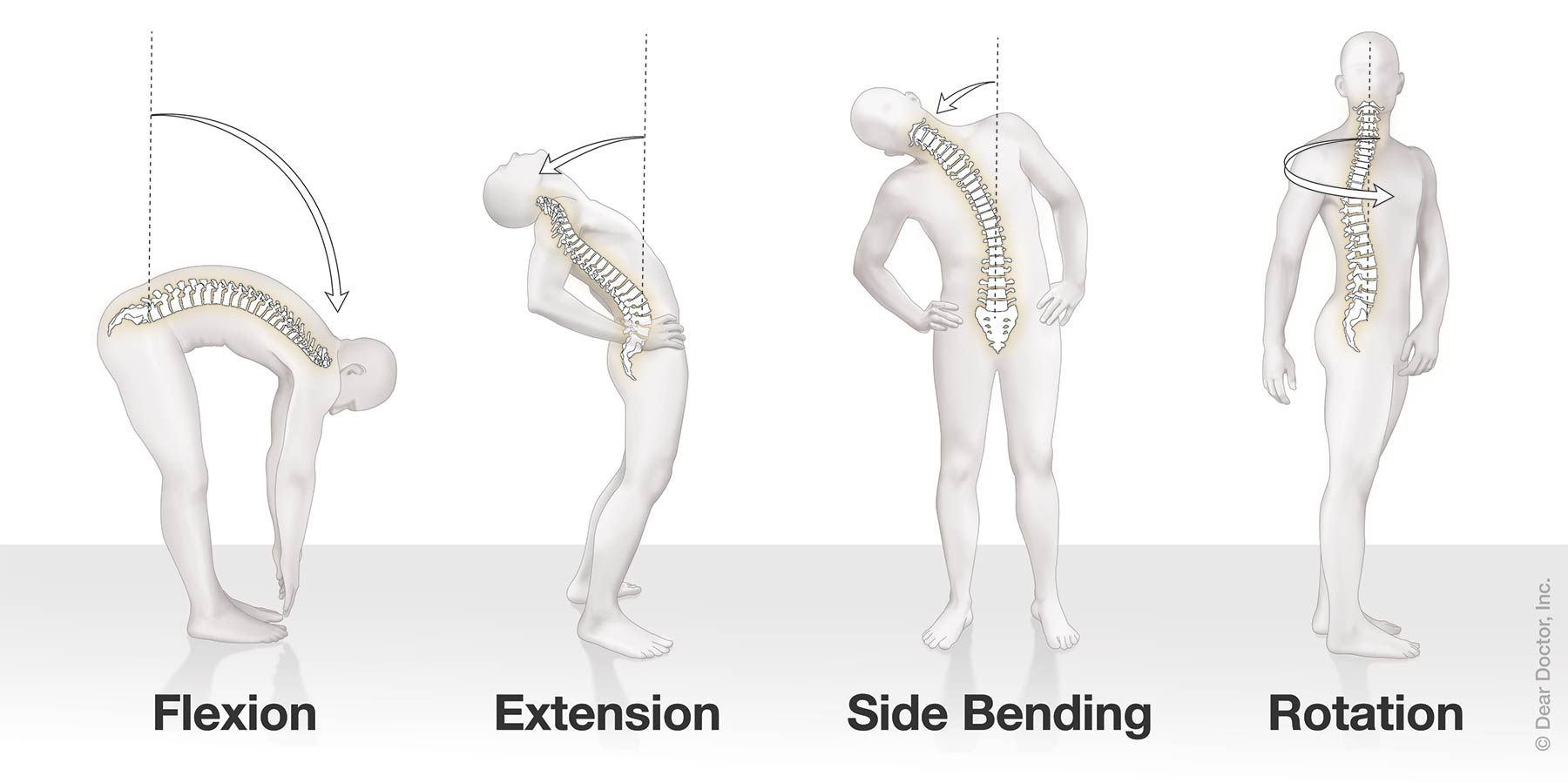
When the spine loses flexibility, everyday movement may become harder and the risk of injury may rise.
Chiropractic Care and Spinal Health
Chiropractors study how each region of the spine relates to the rest of the body. Research suggests that chiropractic approaches may be about as effective as other common options, including pain medication, for some types of spine-related pain. People who are dealing with musculoskeletal discomfort or difficulty moving may want to discuss their situation with a chiropractor or other healthcare provider to learn which options fit their needs.