
Standing tall can make a person appear more confident, but posture matters for much more than appearance. A healthy spine has gentle, natural curves that form an S shape. These curves help absorb impact and spread body weight evenly, allowing the spine to cope with the demands of everyday movement.
A strong, stable spine provides the foundation for nearly everything the body does. When the spine is weak or poorly aligned, it can lead to pain, reduced function and a higher risk of injury. Below is an overview of several common posture problems, their effects and how chiropractic care may help.
Swayback (Hyperlordosis)
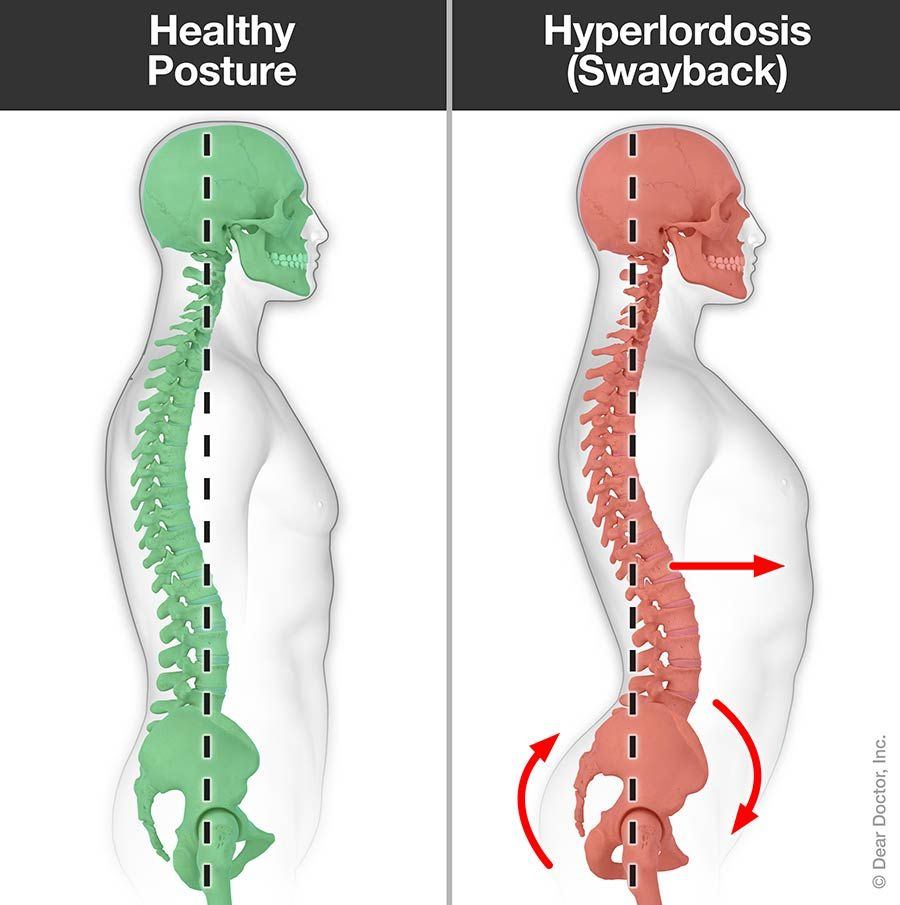
Hyperlordosis, often called "swayback," describes an inward curve of the spine that is deeper than normal. It most often affects the lower (lumbar) spine, though it can also occur in the neck (cervical spine).
Some medical conditions can lead to swayback, but poor posture is a frequent cause. An exaggerated curve changes how weight is carried, placing extra load on muscles and ligaments and making them more prone to injury and wear. Over time, people with swayback may develop a forward-tilted pelvis, muscle tightness and spasms, stiffness, and pain in the low back or neck.
Chiropractors may recommend therapies aimed at restoring a more normal curve, improving posture, slowing degeneration and easing pain and inflammation. Rehabilitation often includes targeted stretching and strengthening exercises to correct muscle imbalances and support healthy spinal curves.
Hunchback (Hyperkyphosis)
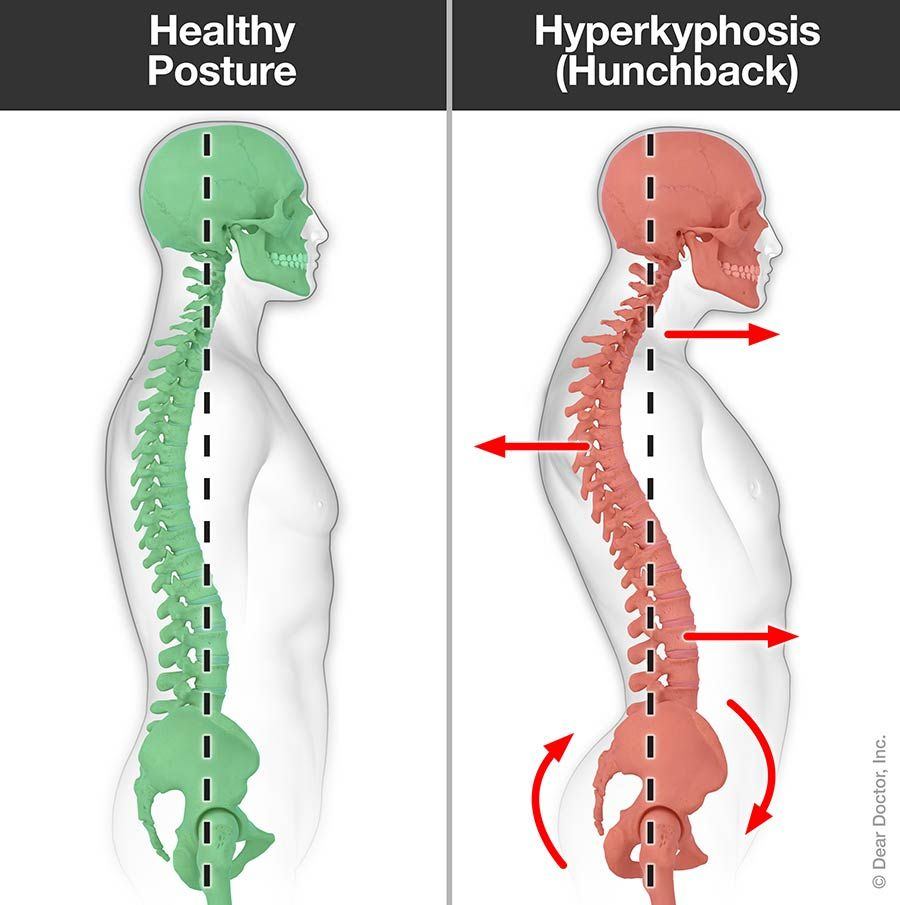
Hyperkyphosis, commonly called a "hunchback," is an excessive forward rounding of the thoracic spine (mid back), generally defined as a curve greater than 40 degrees. It can cause back pain, limit movement and raise the risk of falls and fractures. While it is sometimes related to disease or a condition present from birth, it more often results from poor posture combined with weak muscles and ligaments around the spine.
When posture is the main factor, a chiropractor can teach patients better ways to sit, stand and sleep to help improve the curve. Care may also include periodic spinal adjustments, gentle stretching, exercise guidance, mild electrical stimulation, ultrasound and trigger-point therapy to release tight, tender muscle knots. The goals are typically to reduce pain and inflammation, ease muscle spasms, improve spinal movement and soft tissue strength, and slow further degeneration.
Hyperkyphosis often gets worse over time and may lead to related problems such as neck pain and headaches. Because it can affect quality of life, it is worth having the condition evaluated by a chiropractor or other healthcare provider.
Forward Head Posture
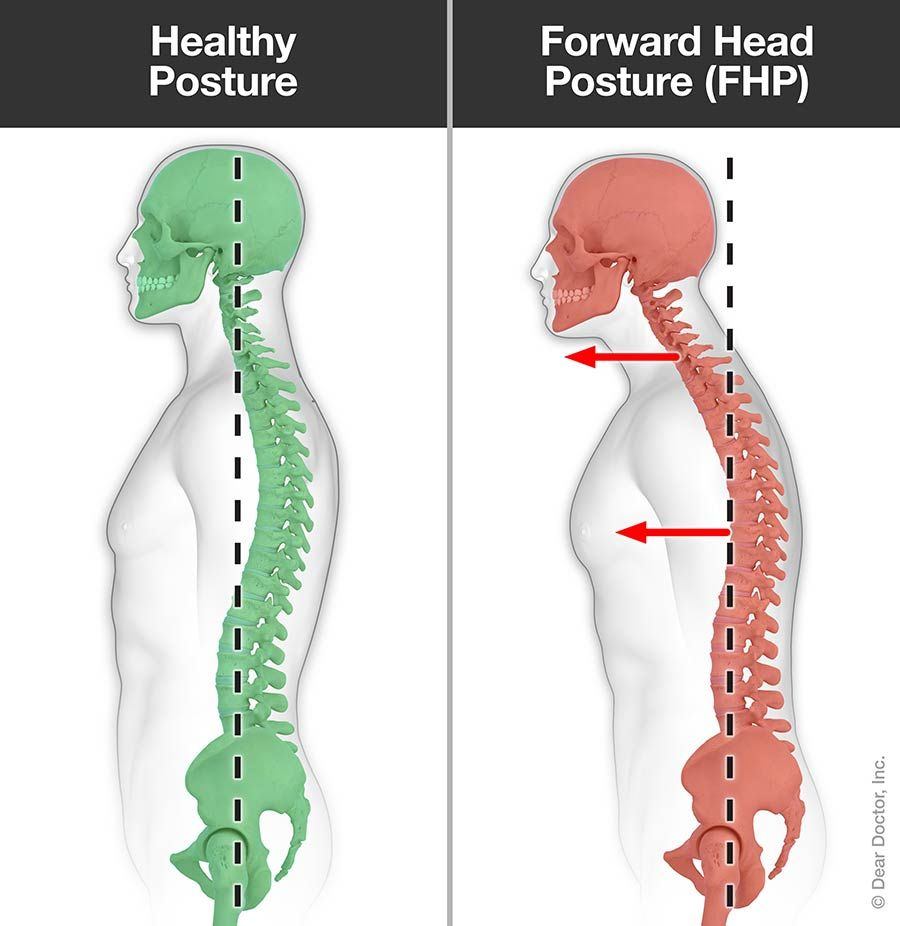
Forward head posture (FHP) can develop as a result of hyperkyphosis. When the shoulders and upper back round forward, the head moves down and in front of the body, and the neck loses its natural curve. The spine then carries less of the head's weight, and the muscles of the neck and shoulders must work harder to hold the head up against gravity. The farther forward the head sits, the heavier it effectively becomes.
The head itself weighs about 10 to 12 pounds, but as it shifts forward, the load on the neck muscles can multiply several times over, creating significant strain. Because the eyes are now angled toward the floor, people tend to tilt the head back to look straight ahead. This bends the upper neck sharply and shortens the muscles running from the base of the skull to the cervical spine. As the head and neck fall out of line with the rest of the spine, neck sprains or strains can develop, and some people may even find it harder to take a full, deep breath.
Spending long periods looking down at phones, tablets or computers can also cause FHP, often called "tech neck." Chiropractors may use cervical adjustments to help restore movement and counter the effects of FHP, and they can recommend exercises to support healthier neck posture.
Flatback Syndrome (Hypolordosis)
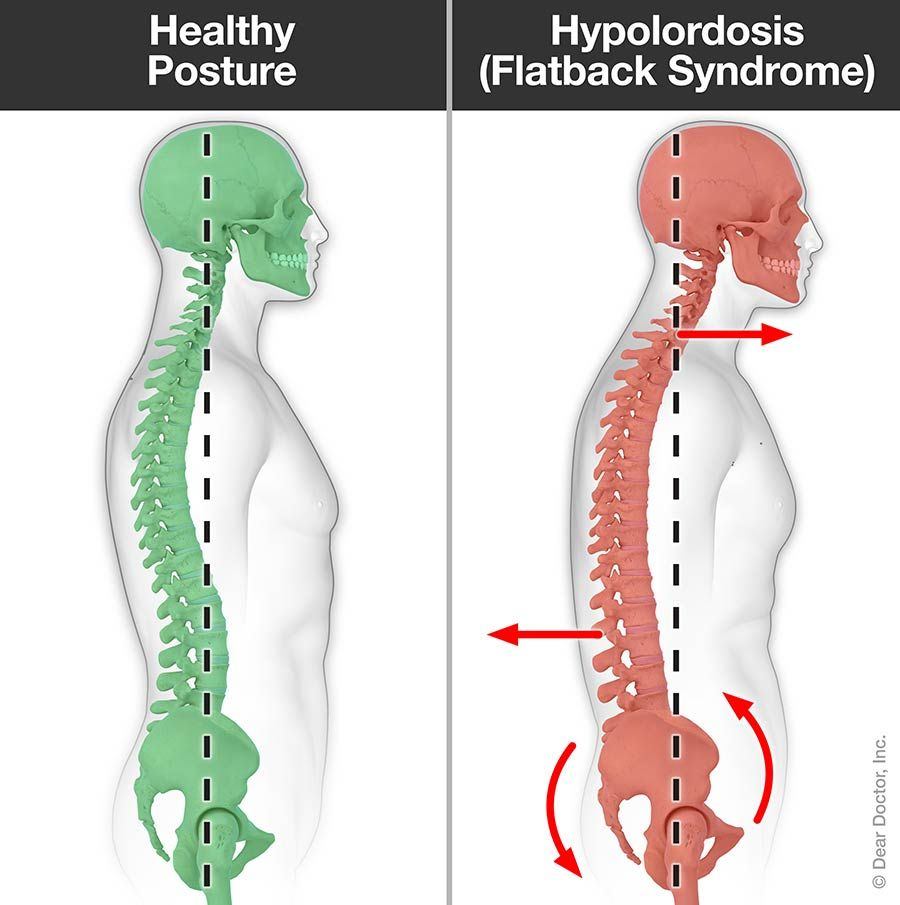
Flatback syndrome occurs when the lower back loses its normal inward curve. The resulting muscle imbalance can cause a person to lean forward and tuck the pelvis under, and standing upright for long stretches may become difficult. Flatback may lead to ongoing back or leg pain, along with strain in the neck and upper back. It can be linked to conditions such as degenerative disc disease, but prolonged sitting and poor posture can also play a role. Some patients find that conservative chiropractic care, such as traction and spinal manipulation, helps manage symptoms, and it may be worth exploring with a provider before considering surgery.
Beyond addressing the symptoms of posture-related problems, chiropractors can help patients build habits that support better posture and spinal health over time. Good posture reduces stress on the spine and the muscles and ligaments that support it, which may help people stay active and comfortable. Anyone concerned about their posture may want to discuss it with a chiropractor or healthcare provider.