
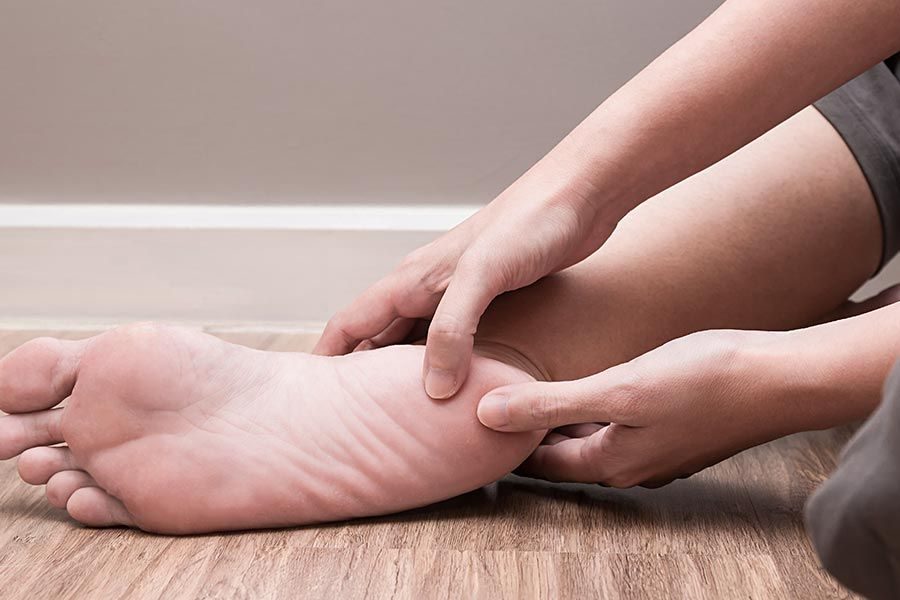
Plantar fasciitis is one of the most common causes of heel pain, affecting an estimated millions of people in the United States each year. It occurs when the thick band of tissue running along the bottom of the foot becomes irritated and inflamed, and it can make standing and walking uncomfortable. Many people with plantar fasciitis improve with conservative care, which may include chiropractic treatment.
Understanding the Plantar Fascia
The plantar fascia is a strong, thick band of connective tissue that stretches from the heel bone (calcaneus) to the base of the toes. It is closely linked with the Achilles tendon at the back of the heel. This band acts like a supportive cable that helps hold up the arch of the foot. When it is irritated or not working well, standing and walking can become difficult and painful.
Signs and Symptoms
Heel pain is the hallmark symptom, although some people also feel pain along the middle of the foot. The discomfort is usually worst with the first steps in the morning or after sitting or resting for a while, and some people compare it to stepping on something sharp. Pain varies from person to person and can range from a mild, dull ache to intense sharp or burning pain. It often eases after walking for a few minutes and may fade during activity, only to return afterward.
What Causes Plantar Fasciitis?
Several factors can contribute to plantar fasciitis, some related to the structure of the body and others related to activity or environment. A tight Achilles tendon is a common contributor, since the two structures are linked and tension in one can affect the other. Sudden weight gain, such as during late pregnancy, can also place extra strain on the plantar fascia.
Distance runners and people whose jobs keep them on their feet for many hours are at higher risk. Shoes that lack proper support may play a role as well. Foot shape matters too: both high arches and flat feet can increase the stress placed on the plantar fascia.
Treatment Options
A variety of treatments may help ease plantar fasciitis. The goals are to reduce pain, restore normal movement in the joints of the foot and lower leg, and improve the flexibility and stability of the Achilles tendon and plantar fascia.
A chiropractor may use adjustments or mobilization of the joints of the foot, ankle, leg and lower back. Care often includes stretching exercises for the plantar fascia and calf, along with home measures such as rest, icing and a regular exercise routine. Soft tissue techniques like massage or myofascial release may help relieve tension in the surrounding muscles and ligaments. Chiropractors can also review footwear and suggest supportive shoes or inserts when needed. Many people find a combination of these approaches helpful.
Heel and foot pain can also come from other conditions, such as stress fractures or nerve problems. A thorough evaluation can help identify the actual cause so that care can be tailored to the individual. Anyone with sudden severe pain, swelling after an injury or an inability to bear weight should seek prompt medical attention.