

Many people have wondered at some point whether they have a pinched nerve. Several conditions, including muscle spasms and peripheral neuropathy, can produce similar symptoms, but a true pinched nerve occurs when surrounding tissue presses on a nerve. That pressure may come from bone, muscle, tendons, ligaments or cartilage.
Depending on the cause, a pinched nerve may develop suddenly or over time. Adults over 30 are at higher risk, partly because the discs between the vertebrae tend to lose moisture and wear down with age.
Signs of a Pinched Nerve
A compressed nerve cannot work normally, which can lead to symptoms such as:
- Numbness
- Sharp, aching or burning pain in the back or shoulder
- Pain that spreads down an arm or leg
- Tingling or a "pins and needles" sensation
- Weakness in the muscles
- Pain that worsens with sitting, coughing or turning the head
What Causes a Pinched Nerve
Common causes include injury, arthritis, a herniated (slipped) disc, bone spurs and repetitive motion. Pinched nerves occur most often in the lower back, or lumbar spine, where they may cause pain in the buttocks or legs. A pinched nerve in the neck, or cervical spine, may lead to pain, numbness or tingling in the shoulder or arm.
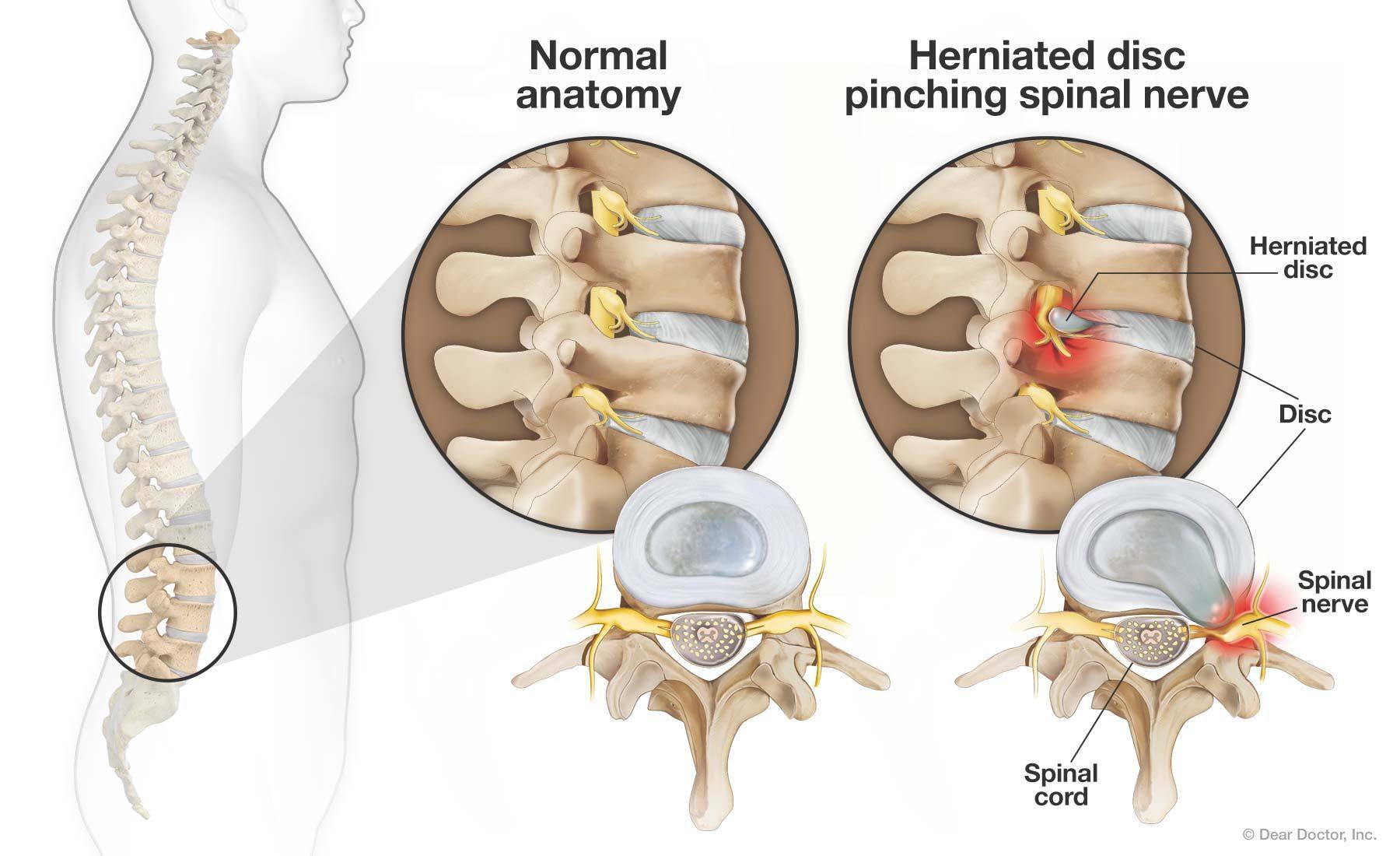
The lower back and neck are the most common sites, but nearly any nerve in the body can become compressed. Carpal tunnel syndrome, often linked to repetitive tasks such as typing, is one example: it involves pressure on the median nerve at the wrist and can cause pain and numbness in the hand and fingers.
Treating a Pinched Nerve
For a suspected pinched nerve, resting the affected area, applying ice for up to 20 minutes at a time and arranging an evaluation with a chiropractor or other healthcare provider are reasonable first steps. With appropriate care, many pinched nerves recover normal function. Even so, it is not a problem to ignore. If whatever is pressing on the nerve is not addressed, pain may persist and the nerve could be permanently damaged.
Chiropractors offer drug-free options for pinched nerves. Adjustments aim to find and address the source of the compression, which may help ease pressure on the nerve. A chiropractor can also suggest safe stretches and home exercises that may reduce pain and support healing. These approaches may allow some patients to avoid the possible side effects of prescription pain medication, NSAIDs, steroid injections or surgery.
Steps that may lower the risk of a pinched nerve include:
- Staying physically active and fit.
- Maintaining good posture.
- Taking regular breaks to stand and move during long periods of sitting.
- Reaching a healthy weight, which may reduce stress and pressure on the spine and joints.
Pinched nerves can be uncomfortable but are usually not serious. However, anyone with the following symptoms should contact a healthcare provider immediately or go to the emergency room:
- Sudden, persistent numbness, weakness or paralysis in the arms or legs
- Loss of bladder or bowel control
- Loss of feeling in the genital area
These symptoms may point to a more serious condition that needs urgent medical treatment. For typical pinched nerves, a chiropractor may be able to help the body heal using conservative care.