
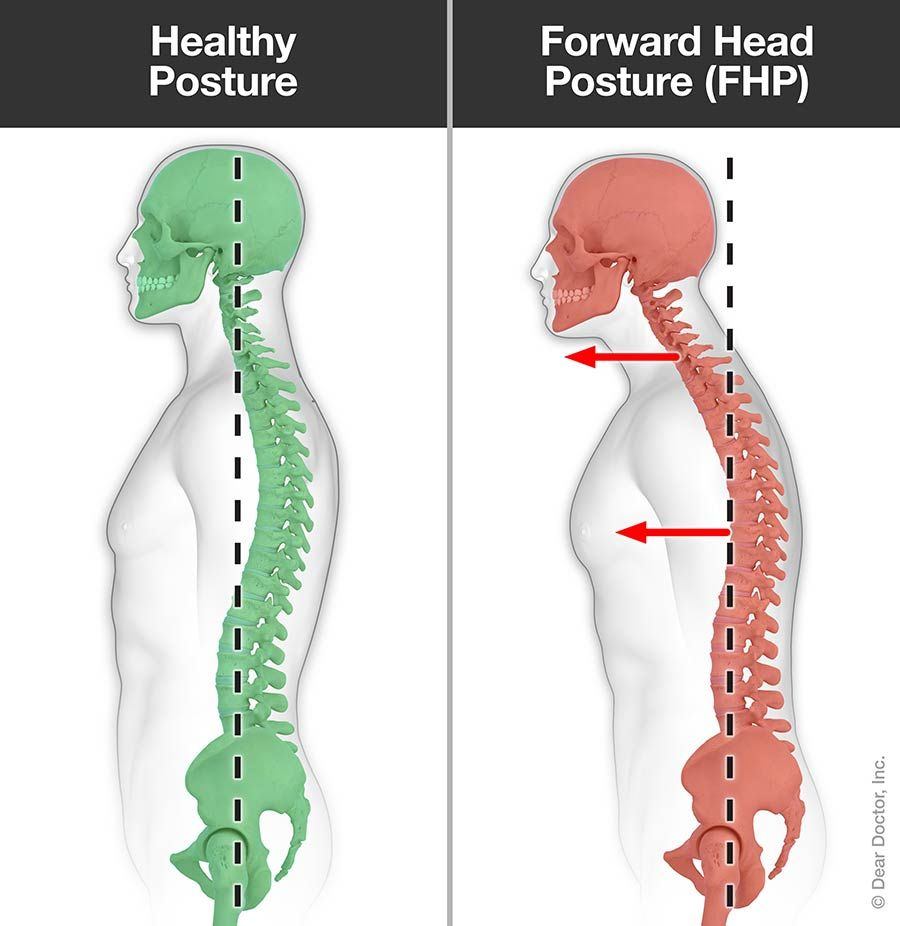
Posture affects more than appearance. Sitting and standing well helps limit unnecessary stress on bones, muscles and ligaments. Chiropractors pay close attention to posture because poor alignment can influence health and comfort in many ways.
Forward head posture (FHP) describes a head that sits out in front of the shoulders rather than stacked above the spine. This position can trigger a chain of other postural changes that strain muscles and may lead to pain.
A quick self-check can show whether forward head posture may be present, which is common among adults:
- Stand with the back and head touching a wall.
- Bring the heels back so they also touch the wall.
- Slide fingers into the gap between the wall and the back of the head.
If three or more fingers fit in that space, forward head posture may be a factor. Frequently looking down at computers, phones and tablets makes it easy for this posture to develop, though many people are unaware of how it can affect the body.
How Forward Head Posture Affects the Rest of the Body
As the head drifts forward, it tends to draw the shoulders forward into a rounded position. This then pulls on the upper back and can exaggerate the natural curve of the spine. Over time, some people develop a noticeably hunched upper back, a condition called hyperkyphosis.
An upright head keeps the back of the neck lengthened. When the head regularly juts forward, the small muscles at the base of the skull shorten and tighten. That tension can tug on the skull and may contribute to headaches, and the spine's overall alignment can become significantly disrupted.
Carrying the head forward greatly increases the load on the neck compared with holding it in a balanced position. Much of that added stress shifts from the neck bones onto muscles that are not designed to bear it, which may lead to headaches or make it harder to turn and tilt the head.

Phone habits add to the problem. The term "nomophobia" describes anxiety about being separated from one's phone, and many people spend hours daily with their heads bent over a screen. This posture may influence mood as well as physical health. Some research suggests that slouching is associated with lower mood, while upright posture may have a positive effect. Standing tall can project confidence and, according to some studies, may even help people feel more confident.
A practical guide to healthy head posture is to keep the head level and the earlobes roughly lined up over the shoulders.
How Chiropractors May Help With Forward Head Posture
Chiropractors are trained in the biomechanics of how the body is built and how it moves, including the effects of posture. When forward head posture is identified, a chiropractor may adjust the neck using precise, controlled movements or instruments to help improve alignment. Stretches, exercises or supportive devices may also be recommended, along with lifestyle changes that can help keep the posture from returning.
With consistent exercise, awareness and practice, forward head posture can often be improved. The following exercises may help, ideally after a chiropractor has shown how to perform them correctly:
- Chin tucks, drawing the chin straight back.
- Chest (pectoral) stretches.
- Stretches for the rhomboids, the muscles linking the shoulder blades to the spine.
- Movement-control practices such as yoga, Pilates or tai chi.
Everyday habits that may help counter forward head posture include:
- Lifting the chest when sitting.
- Raising screens to eye level so the gaze falls on the upper third.
- Choosing a chair with a headrest the head can rest against fully.
- Standing and stretching every 20 to 30 minutes during desk work.
- Sleeping on a cervical pillow designed to support the neck's natural curve.
Changing a long-standing posture such as FHP takes time. The joints have adapted to the forward position, so both the body and the brain need to be retrained. Staying mindful of head position can help people self-correct until better posture becomes automatic. Those concerned about forward head posture may want to talk with a chiropractor about ways to reduce discomfort and lower the risk of injury.