

Back pain gets much of the attention when it comes to work injuries, but carpal tunnel syndrome (CTS) is one of the most disruptive work-related conditions. It affects the hand, wrist and fingers, and it is a common reason for lost workdays. Cases can involve long recovery periods, along with significant costs for medical care and time away from the job.
CTS is the most familiar member of a family of conditions called repetitive strain injuries. It tends to develop gradually in people who use their hands in the same motions over and over. Symptoms can include pain, numbness, tingling, burning, shock-like sensations in the hand, and trouble gripping objects or closing the hand into a fist. Conservative care, including chiropractic treatment, may help many people manage this condition.
What Causes Carpal Tunnel Syndrome?
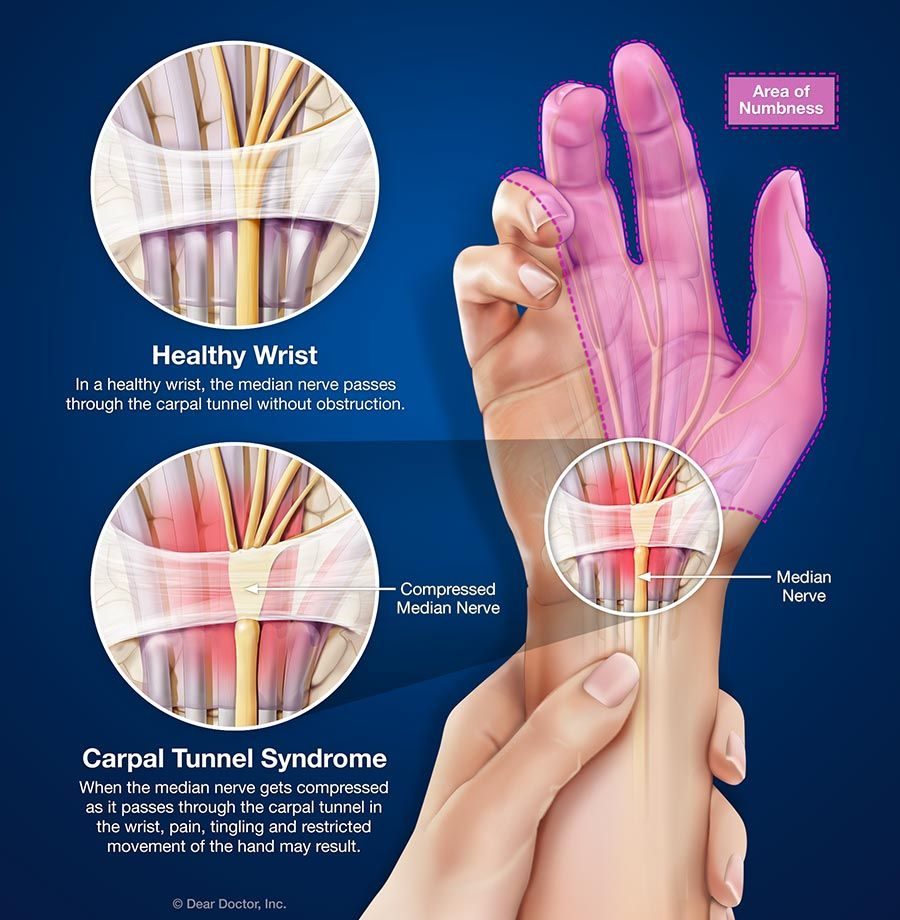
A quick look at wrist anatomy helps explain CTS. The carpal tunnel is a narrow channel formed by the small wrist bones and a band of ligament across the front of the wrist. The median nerve travels from the forearm through this channel into the hand, where it provides feeling and muscle control to the thumb, index finger, middle finger and part of the ring finger. The tendons that bend the fingers pass through the same tight space.
This design works well for people whose hands perform a variety of tasks during the day. Problems can arise when work or hobbies demand the same small hand motions for hours at a time, such as typing and data entry, assembly line work, knitting, playing string instruments, meat processing or cutting hair. Repeated motion can irritate the tendons and cause swelling inside the tunnel, which may press on the median nerve. Inflammation from repetitive use may also contribute. Women develop CTS more often than men, possibly because their carpal tunnels tend to be smaller.
Early on, people may notice tingling or numbness in the thumb and first two fingers from time to time, often at night. As CTS advances, these sensations may become more frequent and may be accompanied by burning. Feeling and coordination in the hand can decline, with or without pain in the wrist, palm or lower forearm. Because the median nerve helps power the thumb's grip, weakness can lead people to drop things more often.
Treatment Options
Conventional medical care for CTS may include wrist splints, pain medication, steroid injections and, in more advanced cases, surgery. Surgery helps many patients, but outcomes vary and not everyone regains completely normal hand function afterward.
Chiropractic care offers a conservative, non-drug option that some people choose to explore before considering more invasive treatment. A chiropractor will usually start with a health history and physical exam to find out what is behind the numbness or tingling. Other problems, such as a pinched nerve in the neck, can produce similar symptoms, so a proper diagnosis is important before starting any self-care. Anyone with severe or rapidly worsening weakness, or constant numbness, should be evaluated promptly by a healthcare provider.

Chiropractic care for CTS can involve several methods. Because the nerve roots that form the median nerve exit from the neck, a chiropractor may include gentle adjustments of the cervical spine in addition to the elbow and wrist. The idea is that irritation anywhere along the nerve's path may add to symptoms felt in the hand.
Soft tissue work, either by hand or with specialized tools, is often part of care. Other options may include heat and ice, electrical muscle stimulation, ultrasound, low-level (cold) laser therapy and traction. Low-level laser therapy is intended to support tissue healing and reduce pain and swelling, and it has been used for CTS for many years.
Chiropractors may also suggest stretches and practical changes such as better posture, regular breaks from repetitive tasks, and ergonomic equipment like wrist supports, keyboard trays and specially designed keyboards.
Why Consider Chiropractic Care for CTS?
Chiropractic treatment is one of several conservative approaches that may be considered for CTS, and research over the years has explored its role in managing symptoms. For some people, it may help restore hand function and improve daily comfort, and in certain cases it may help them delay or avoid surgery. People with hand or wrist symptoms can talk with a chiropractor or other healthcare provider to decide which approach suits their situation.