

Getting older brings changes throughout the body, many of which happen gradually and out of sight. Bones, muscles and connective tissues all wear over time. Wrinkles and gray hair are easy to spot, but changes in the spine usually go unnoticed until they start to cause problems such as back or neck pain, stiffness or numbness. In reality, the discs between the vertebrae can begin showing signs of wear surprisingly early in life, often years before any symptoms appear.
These changes tend to show up most in the neck and lower back. For many people, the first noticeable sign is low back pain that develops sometime in early to middle adulthood. Aging itself can't be stopped, but there are practical steps people can take, often with the help of a chiropractor, to support a healthier spine through the years.
What Happens to the Spine With Age
The spine is a stack of bones called vertebrae, separated by cushioning discs that allow it to bend and twist. Each disc has a tough outer layer and a soft, gel-like center. Over time, discs lose moisture and become thinner and less flexible, which can bring stiffness, inflammation and pain. As discs flatten, the openings that the spinal cord and nerves pass through can become smaller. This narrowing, known as spinal stenosis, may put pressure on nerves and lead to low back pain, leg numbness or weakness. If the soft inner material of a disc pushes through its outer wall, called a herniated disc, it can press on nearby nerves and add to pain and irritation.
Arthritis and osteoporosis are two other age-related conditions that can affect the spine. Arthritis can develop in the small joints that link the vertebrae, not just in the hips, knees or hands. Osteoporosis occurs when bones gradually lose density and strength. It is more common in women, particularly after menopause, but men can develop it too. Weakened vertebrae are more prone to fractures, so bone health matters for everyone as they age.
The Three Stages of Spinal Degeneration
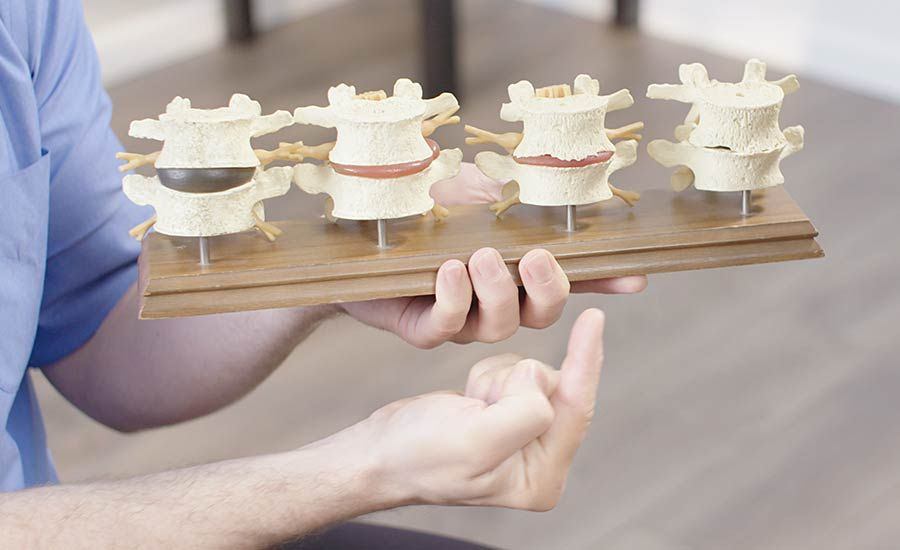
Spinal degeneration is often described in three general stages. In the first stage, the discs start losing fluid and height. Certain health conditions may speed this up. Symptoms are uncommon at this point, but these early changes can set the stage for joint problems, pain and narrowing of the spinal canal later on. In the second stage, imaging may show that the spine's natural curve is starting to flatten. The spaces between vertebrae shrink, discs may bulge outward, joint surfaces become rougher and bone spurs may begin to form, all of which can make the spine less stable. In the third stage, the curve is further reduced and the discs continue to break down. The spaces between vertebrae narrow further, herniated discs and bone spurs become more likely, and some people develop spinal stenosis or ankylosis, in which vertebrae fuse together.
How Chiropractors Approach Spinal Degeneration
Supporting long-term spinal health is a central goal of chiropractic care, which is why some people choose to see a chiropractor before pain begins. An examination, along with imaging such as x-rays when appropriate, can reveal signs of disc wear that a person may not yet feel. When degeneration is present, chiropractic care typically aims to ease discomfort and help limit further wear. Common approaches include spinal adjustments and flexion-distraction, a gentle traction-style technique. These methods are intended to improve joint movement, reduce inflammation and take stress off irritated areas. A chiropractor may also suggest stretches for tight muscles, exercises to strengthen the back and improve posture, and dietary guidance, since nutrition plays a role in bone and tissue health.
Reasons to Consider Chiropractic Care for an Aging Spine

Chiropractors may be able to spot degenerative changes early, before they lead to more significant problems. Research suggests that chiropractic care may help some people manage age-related back problems with a less invasive approach than many other options. For that reason, many people consider it a reasonable early step for back pain or as part of a proactive plan for spinal health.
Daily habits make a difference as well. Staying physically active and limiting long periods of sitting are among the most helpful things people can do for their backs as they get older. Because degenerative changes start early and generally can't be reversed, it's never too early to start caring for the spine. Alongside adjustments, a chiropractor may recommend other therapies to address aches that have built up over time. Anyone with back pain, especially pain that is severe or accompanied by weakness, numbness or changes in bladder or bowel control, should seek prompt medical evaluation. For everyday back concerns, talking with a chiropractor or other healthcare provider can help clarify which options make sense before considering surgery.