
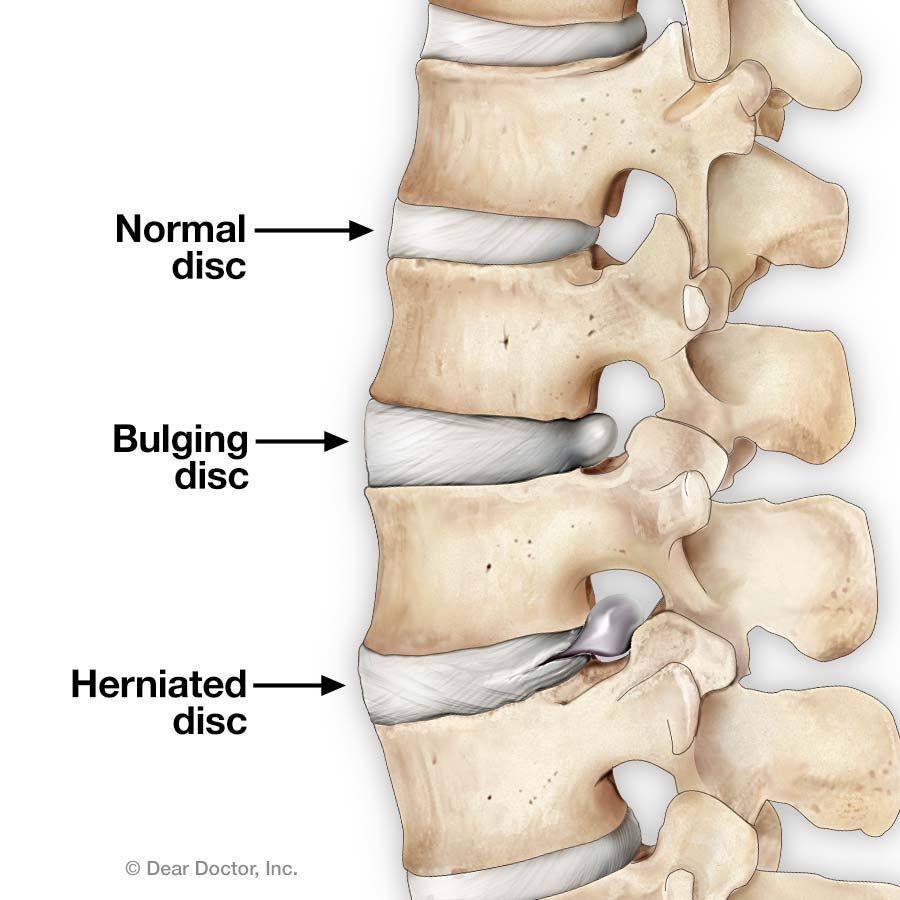
Bulging and herniated discs can cause significant pain. The cushioning discs between the vertebrae (called intervertebral discs) can hurt when they are injured, and they can also irritate or squeeze nearby nerves anywhere along the spine. When a nerve becomes involved, symptoms are often more severe and may affect strength and function. These disc problems happen most often in the lower back, though they can also develop in the neck or mid back. A thorough history and physical exam can help a chiropractor determine whether a disc is likely behind a person's pain.
How Discs Are Built
The structure of a disc is fairly simple. Each disc is a pad of cartilage positioned between two vertebrae, where it acts as a shock absorber during movement. A disc has two parts: a sturdy outer wall made of layered rings and a soft, gel-like core inside. One way to picture it is as a thick slice of onion with the center rings removed and the hollow filled with gel.
What Causes Disc Problems
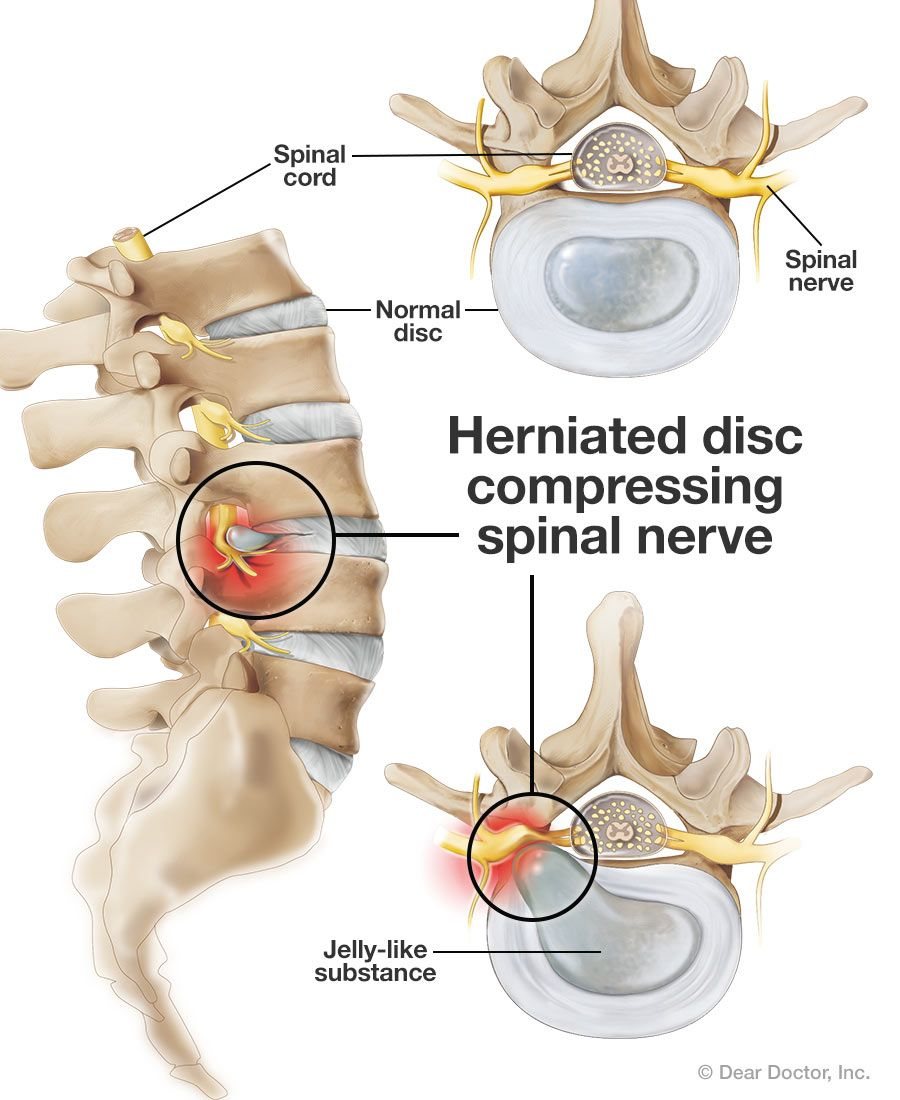
Although the outer wall of a disc is strong, it can weaken over time due to aging, everyday wear, lack of physical activity or excess body weight. A weakened disc is more vulnerable to damage from repetitive movements, sudden force, or lifting something heavy and twisting while holding it. As the outer layers weaken, pressure from the gel-like core can push them outward and distort the shape of the disc. This change is called a bulge or prolapse. If the outer layers tear and some of the inner gel escapes through the opening, the injury is called a herniation.
With either a bulge or a herniation, the misshapen disc may press on surrounding nerves or the spinal cord, which often leads to pain. Depending on where the disc problem is located, symptoms may show up some distance away. A problem in the lower back, for example, can cause pain, numbness, tingling or weakness that travels into one or both legs or feet. A disc problem in the neck may produce similar symptoms in the arms or hands. Anyone who develops loss of bladder or bowel control, numbness in the groin or inner thighs, or rapidly worsening leg weakness should seek emergency medical care.
How Disc Problems Are Diagnosed
During an initial exam, chiropractors use orthopedic and neurological tests to look for signs of a disc problem and to identify which nerves may be affected. Based on the exam findings and how severe the symptoms are, x-rays or an MRI may be ordered. X-rays can show the space between vertebrae, which gives some indication of disc height and overall spinal health, but an MRI provides the most detailed view of soft tissues like discs. It is also worth knowing that disc bulges and herniations sometimes appear on an MRI without causing any symptoms, so they may be discovered by chance when someone is scanned for a different reason.
Ways Chiropractors Treat Disc Problems
Several treatment approaches may be used for a bulging or herniated disc. A common one is flexion-distraction therapy (often called F&D). It uses a specialized table to move the spine through gentle, rhythmic bending and stretching motions. The goal is to open up space between the vertebrae, give the disc more room and reduce pressure on nearby nerves.
Mechanical traction works on a similar idea, applying a slow, sustained pull to the affected area to increase space between vertebrae. It is usually performed with a machine while the chiropractor or a trained assistant monitors the session. Spinal adjustments may also be appropriate in some cases, with the aim of improving joint movement in the spine and supporting the healing process.
Chiropractors may also use in-office therapies such as therapeutic ultrasound, low-level (cold) laser or interferential current (IFC) to address the muscles and nerves affected by a disc problem, along with other techniques designed specifically for disc injuries.
Care at home often plays an important role too. Patients may be taught specific stretches and exercises to do between appointments.
There are a number of ways to approach a bulging or herniated disc. A chiropractor can help evaluate whether a disc is involved and work with each patient on a plan aimed at reducing pain and supporting spinal health.