

Knee pain affects people of every age. A swollen, stiff knee can be very painful, and some people notice grinding or popping sounds or find it hard to fully straighten the leg. The knee may also feel weak or as though it might give way. There are many possible reasons for knee pain, and arthritis is among the most common, as the knees are weight-bearing joints that are frequently affected by it. Chiropractors are trained to evaluate joint pain and to care for many of the conditions that can contribute to it.
What Causes Knee Pain?
Knee pain has many possible sources, but most cases fall into a few broad groups: injuries such as torn ligaments or damaged cartilage, various forms of arthritis, and other mechanical or medical conditions. An injury can affect the tendons or the bursae, small fluid-filled sacs that cushion the outside of the joint. It can also involve the bones, cartilage, and ligaments that make up the joint itself.
Frequent knee injuries include fractures of the bones around the knee, tears of the anterior cruciate ligament (ACL), and tears of the meniscus, the firm, rubbery cartilage that cushions the space between the thighbone and shinbone. Inflammation may also develop in the bursae (bursitis) or in the tendon that connects the kneecap to the shinbone (patellar tendinitis). Types of arthritis that can involve the knee include osteoarthritis, rheumatoid arthritis, gout, pseudogout, and septic arthritis, which is an infection within the joint.
Other conditions linked to knee pain include patellofemoral pain syndrome, which causes aching and stiffness around and behind the kneecap; loose fragments of bone or cartilage within the joint, often from degeneration; iliotibial band syndrome, an overuse problem affecting the outer thigh and knee; kneecap dislocation; and problems in the hip or foot that change how weight is distributed and add stress to the knee.
Factors that raise the risk of knee pain include excess body weight, weak or tight muscles, sports or jobs that place repeated stress on the knees, and a history of earlier knee injuries.
A knee that suddenly cannot bear weight, looks deformed, or becomes hot, red, and swollen, especially with a fever, needs prompt medical evaluation.
Conservative Approaches to Knee Pain
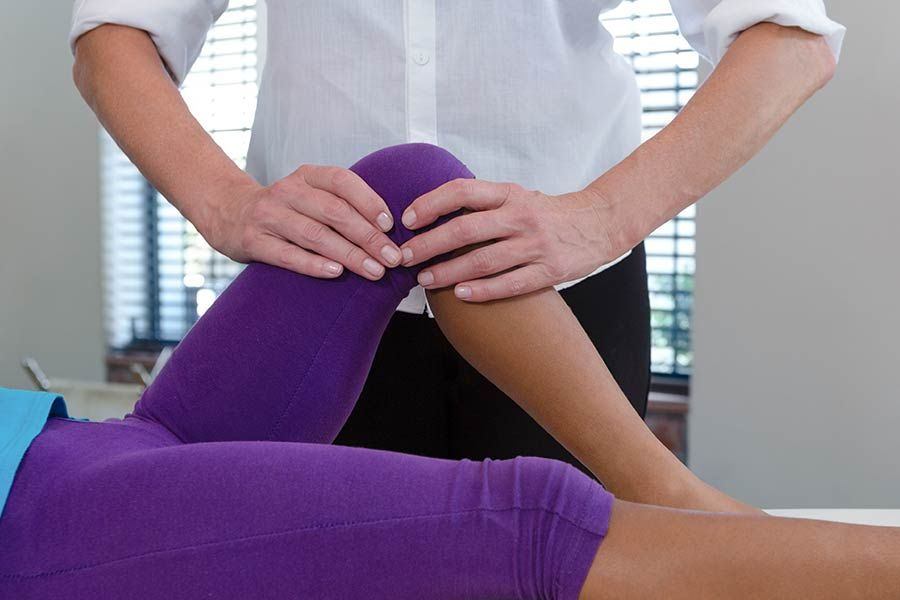
The right approach to knee pain depends on what is causing it and on the person's specific symptoms. Chiropractors aim to address contributing factors, such as how the hips, feet, and spine affect the knee, while also helping relieve pain in the knee itself. Care may include strengthening and stretching exercises, guidance on healthy weight and nutrition, soft tissue work, instrument-assisted adjustments, massage, posture correction, spinal adjustments, trigger point therapy, low-level laser therapy, and ultrasound.
Reasons to Consider Chiropractic Care for Knee Pain
Chiropractors use conservative, non-invasive methods to help manage pain in many different joints, including the knees. Knee pain can interfere with walking, exercise, work, and sleep. To find the source of the problem, a chiropractor will examine the knee and surrounding areas and may order imaging. Once the cause is identified, the chiropractor can explain the options and develop a care plan with the patient, referring to another specialist when needed.
People dealing with ongoing knee pain can talk with a chiropractor or other healthcare provider about which approach may be right for them.