

Golfer's elbow, known medically as medial epicondylitis, is an overuse injury that can affect anyone, not only people who play golf. It causes pain on the inner side of the elbow, where the forearm muscles attach to the bone. Other possible symptoms include stiffness, aching, a dull burning sensation, weakness, and numbness or tingling. Pain often gets worse with forceful or repeated wrist movements and may spread along the forearm. Over time, it can limit how far the elbow moves and make straightening the arm uncomfortable.
Golfer's elbow and tennis elbow are both types of elbow tendinitis. The main difference is location: golfer's elbow involves the tendons on the inner side of the elbow, while tennis elbow involves the tendons on the outer side. Either condition can make everyday tasks harder, and chiropractic care may help ease the symptoms.
What Leads to Golfer's Elbow?
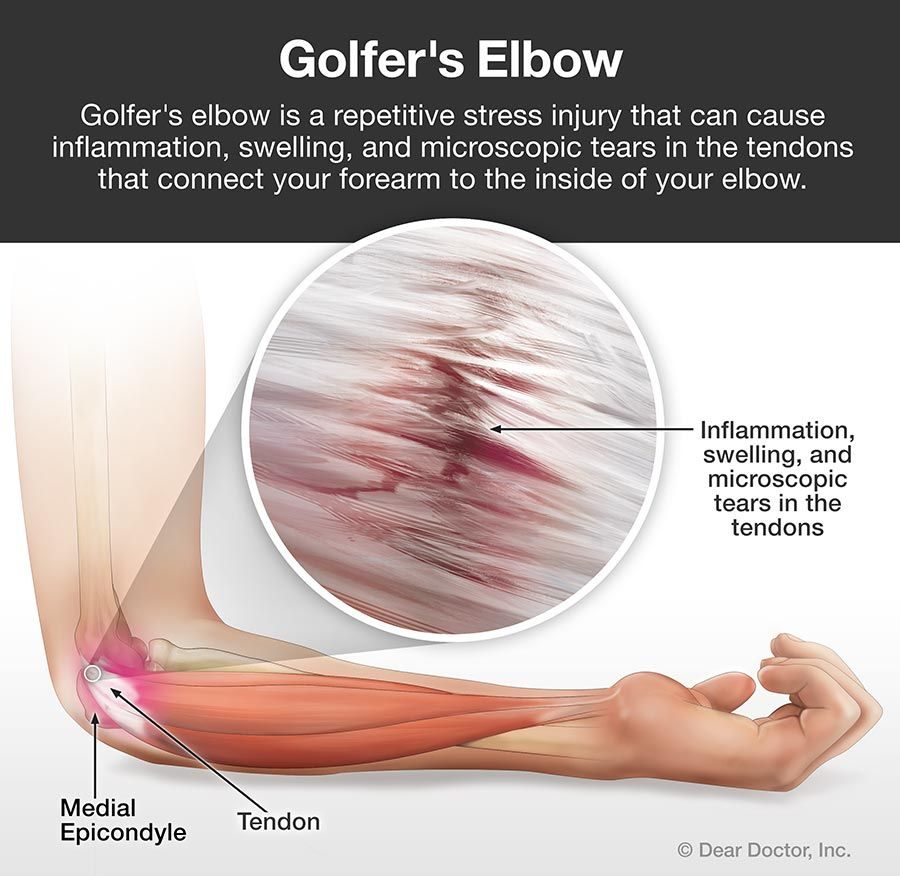
Golfer's elbow usually develops when repeated use of the hands and fingers overloads the forearm muscles, particularly those that attach at the inner elbow. Months or years of repetitive gripping, wrist bending, or swinging can strain these tendons, leading to small tears. As the body tries to repair the damage, scar tissue may form, and this can cause pain where the forearm tendons meet the elbow.
Activities often associated with golfer's elbow include golf, baseball, rock climbing, archery, football, javelin throwing, hammering, typing, texting, and video gaming. Without attention, the condition can become chronic, which may mean a longer and more involved recovery.
Chiropractic Approaches to Golfer's Elbow
Chiropractors generally combine several methods when caring for golfer's elbow. The goals are to help break down scar tissue around the elbow, calm inflammation, and restore normal movement and function in the elbow and forearm. Care may include manipulation of the spine or other joints, myofascial release and active release techniques, massage, fascial stripping, stretches for the forearm flexors and chest muscles, eccentric exercises (which strengthen a muscle as it lengthens under load, such as slowly lowering a weight), and kinesiology tape.
Reasons to Seek Care Early
Because golfer's elbow can turn into a long-term problem, it is wise to address it soon after symptoms begin. When elbow tendinitis is suspected, a chiropractor will typically examine the elbow, wrist, and neck to look for other factors that may be adding stress to the area. Once the likely cause is identified, the chiropractor can suggest a plan based on the person's symptoms and daily activities. Long-standing cases often take more time to improve. Seeking care early may improve the chances of regaining full motion and avoiding lasting problems with arm movement. People with elbow pain can discuss their options with a chiropractor or other healthcare provider.