
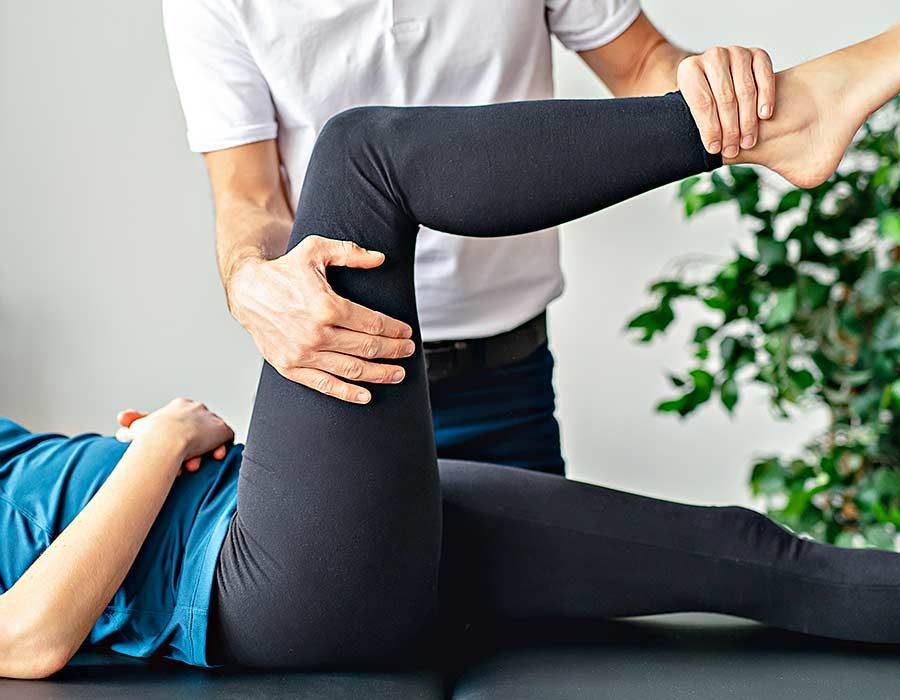
Chiropractors often include stretching and strengthening exercises in a treatment or rehabilitation plan, to be done during visits, at home, or both. Depending on the area involved and the diagnosis, the exercises may be general or focused on a specific body part. The chiropractor or a member of the care team typically demonstrates each exercise, checks that the patient is doing it with proper form, and answers any questions along the way.
Joint Stability
Stable joints and a stable spine help protect the nerves and allow the body to move the way it should. When a joint is unstable, it can become painful and hard to move, and over time it may lead to pain in other areas as well. A sprained ankle is a good example. The ligaments, and sometimes the tendons, around the ankle are overstretched, leaving the joint loose and painful to walk on. As a person favors the injured ankle, other joints and muscles take on extra work, which can create new aches.
Strengthening exercises are not usually started right after a sprain. After a period of healing, often a week or longer depending on the severity, exercises for the foot, ankle, and knee may be added to help stabilize the ankle and leg. Building this stability may help protect the ligaments from being overstretched again and lower the chance of another sprain.
Stretching can also support joint stability. Muscles, tendons, and ligaments that are overly tight can pull on the joints they attach to and disrupt how those joints move. Chiropractors may recommend targeted stretches to lengthen shortened muscles and their attachments so the joint can move more freely.
Flexibility
Both stretching and strengthening play a key role in building and keeping flexibility. When flexibility is limited, joints may be placed under extra stress, and muscles may end up supporting the body in ways they are not meant to. Adding the right exercises for a stiff area may help relieve pressure on the joints and muscles involved so they can work more efficiently.
Posture
Many people spend long hours sitting at a desk, leaning toward a screen, or standing in one spot. Over time, these positions can lead to discomfort. Staying in one posture for too long can leave muscles stiff and sore and keep joints from moving well. Stretching and strengthening exercises, including many that can be done during a short break at work, may help improve posture and ease pain related to it. Simple moves such as gentle neck stretches, shoulder blade squeezes, and standing up to stretch every so often can make a noticeable difference over time.
Most people can benefit from regular, guided stretching and strengthening, but the best exercises vary from person to person. Anyone interested in adding exercise to their care can ask a chiropractor or other healthcare provider which stretches and strengthening moves suit their needs.