

Stiffness or soreness after long stretches of phone use may be a sign of what is often called "tech neck" or "text neck." Leaning over a smartphone, tablet or laptop places the body in a posture that can strain the muscles and spine. Since many people now spend several hours a day on devices, this problem appears to be increasingly common. Chiropractors receive specific training in biomechanics, the study of how posture and movement affect the body.
Effects That Reach Beyond the Neck
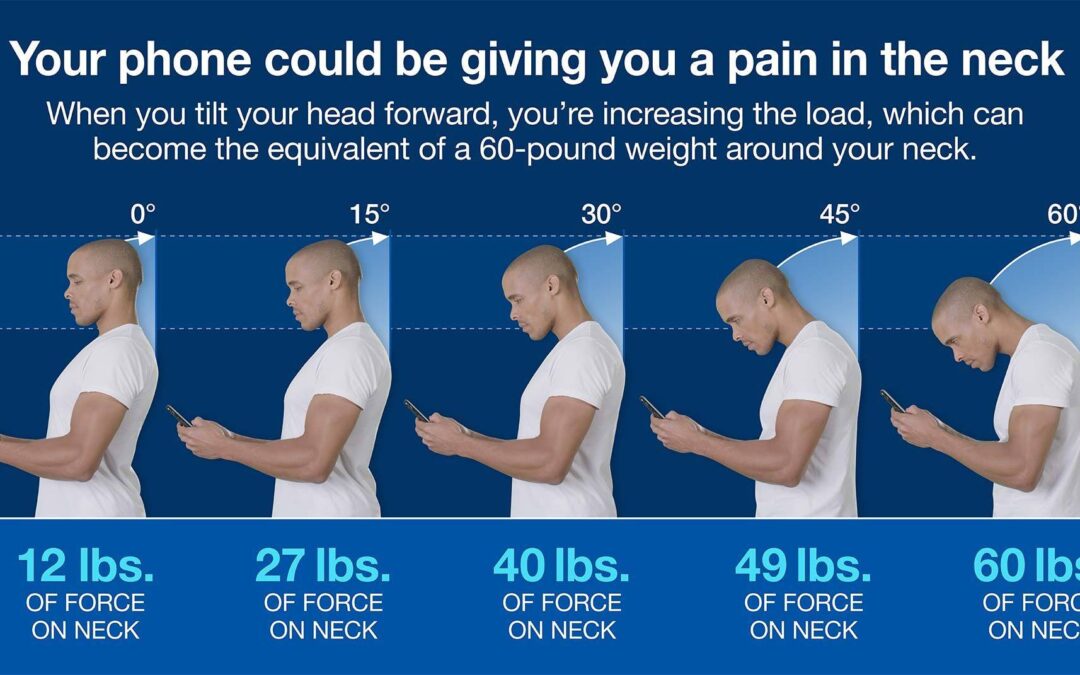
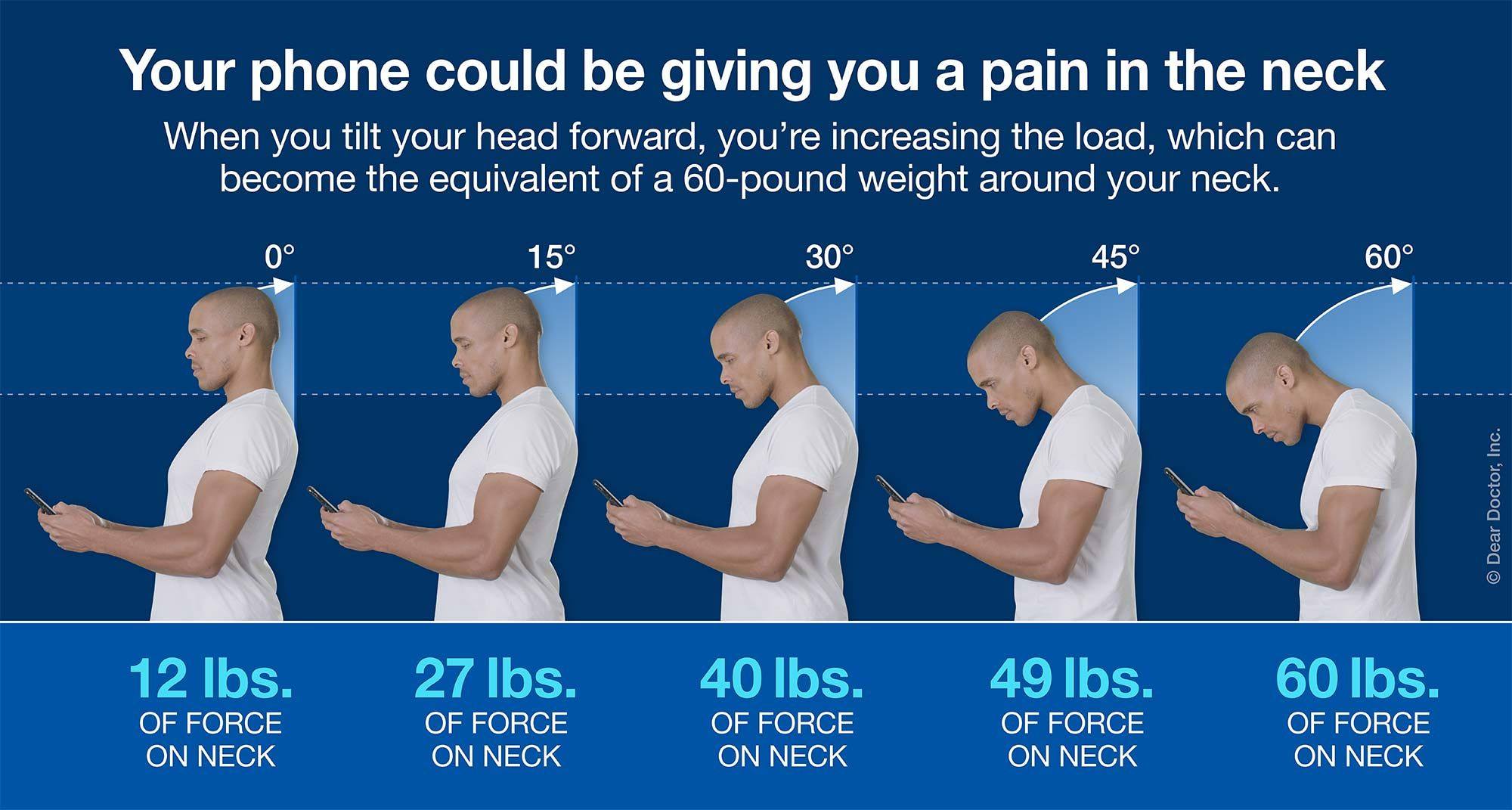
An average adult head weighs roughly 10 to 12 pounds when held upright, and that is the load the neck supports. As the head tips forward to look down at a screen, the strain on the neck increases substantially. Some estimates suggest that a steep forward tilt may place as much as 60 pounds of force on the cervical spine, which helps explain why discomfort develops.
A forward head position can also affect posture farther down the body, rounding the upper back and shifting the position of the pelvis. The resulting imbalance places extra stress on the vertebrae, muscles and ligaments. Stiffness and pain in the neck and shoulders are the most typical symptoms, but because the body works as a connected system, sometimes called the kinetic chain, the upper and lower back and even the wrists may be affected. Forward head posture is also a frequent contributor to tension headaches.

Over time, prolonged forward head posture may reduce the neck's natural curve, which some experts believe may contribute to degenerative changes such as arthritis. Some people also notice numbness or tingling in their fingers, particularly the thumbs used for texting.
Holding the head forward for long periods may also increase stress on the spinal discs, which could raise the risk of disc problems such as herniation. In addition, a slumped posture compresses the chest, which may limit how fully the lungs can expand and potentially reduce breathing efficiency. Anyone who develops numbness, weakness in the arms or hands, or difficulty breathing should be evaluated promptly by a healthcare provider.
Ways to Address and Prevent Tech Neck
Chiropractic adjustments may help ease pressure and discomfort, but changing daily habits and the way devices are used is often the most important step in lowering long-term risk. Some practical strategies include:
- Raise the phone closer to eye level instead of looking down at it.
- Lower the eyes rather than bending the neck when glancing at a screen.
- Pause roughly every 20 minutes during device use to stretch and move.
- Use a stand or holder for tablets and phones so the arms and shoulders can relax.
- When typing, keep the head balanced over the shoulders, wrists straight and shoulders loose.
Chiropractors sometimes recommend "mirror exercises," which involve moving in the opposite direction of a problem posture. Examples include:
- Lying on the back on a bed with a rolled towel or small bolster supporting the neck, allowing the head to gently tilt back for a few minutes.
- Lifting the shoulders toward the ears and then lowering them, concentrating on drawing the shoulder blades down and back.
Tech neck is a modern problem that is unlikely to disappear, but healthy device habits may help prevent it. People who use devices heavily and experience ongoing neck or shoulder stiffness may want to talk with a chiropractor or other healthcare provider about an evaluation and a plan to keep the spine moving well.