

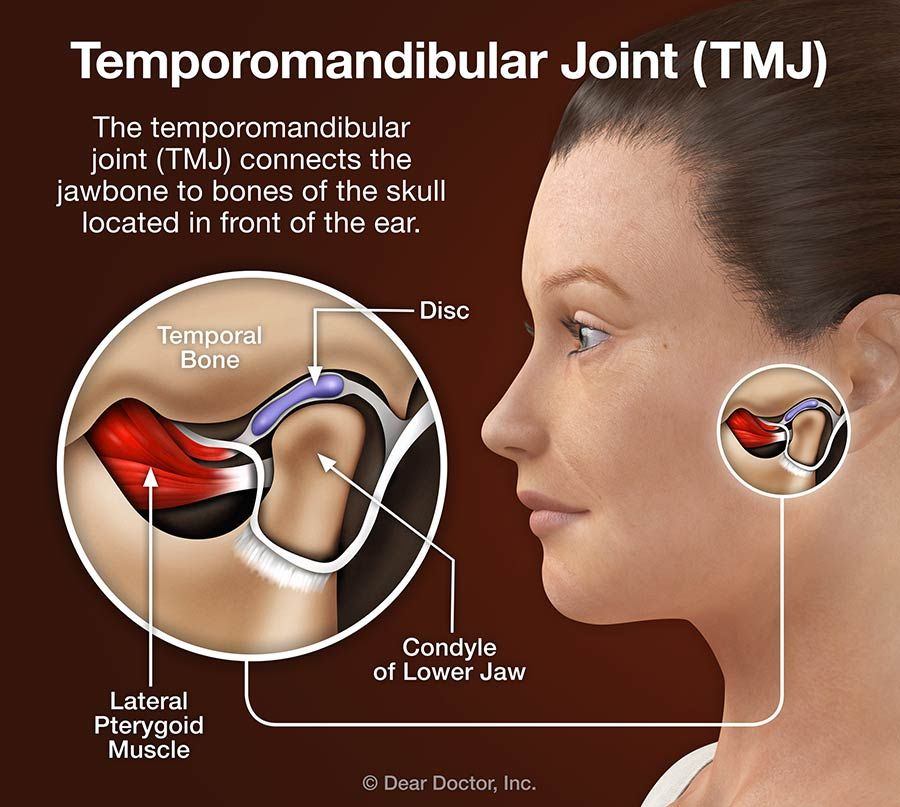
The temporomandibular joints (TMJ) link the lower jaw to the skull just in front of each ear. They allow the jaw to open, close and shift side to side for chewing, speaking, laughing and yawning. Problems involving these joints and the muscles and tissues around them are known as temporomandibular joint disorders (TMJD or TMD). An estimated 5 to 12 percent of people are affected, and these disorders occur more often in women. The cause is not always clear, but TMJD can lead to pain and reduced function in and around the jaw. Some people with this condition report relief with chiropractic care.
Signs and Risk Factors of TMJ Disorders
Typical symptoms include pain or tenderness around the jaw joint along with tension and discomfort in the neck and shoulders. One or both joints may be affected. Some people notice aching in or near the ear, pain when chewing or trouble chewing. The jaw may lock, making it hard to open or close the mouth, and clicking, popping or a grinding sensation during chewing or opening the mouth is also common.
Possible risk factors include genetics, jaw injury, rheumatoid arthritis, osteoarthritis, chronic teeth grinding or clenching, and connective tissue disease affecting the jaw joint.
Treatment Options for TMJ Disorders
Chiropractic care may help ease some of the pain and other symptoms of TMJD. At an initial visit, a chiropractor typically reviews symptoms and examines the jaw and neck, and x-rays may be ordered to look for contributing factors.
Many chiropractors who treat TMJD pay particular attention to the cervical spine, since neck dysfunction may play a role in jaw problems. Care may include neck adjustments or muscle work, often focused on the pterygoid, one of the chewing muscles. Soft tissue massage, specific exercises and intraoral myofascial release may also be used, along with suggested lifestyle changes.
Why Consider Chiropractic Care for TMJD?
A chiropractor can help identify TMJD, recommend care suited to the individual and refer to another healthcare provider, such as a dentist, when appropriate. People with symptoms of a TMJ disorder may benefit from seeking an evaluation early. Chiropractic care offers a noninvasive, whole-body approach that may help manage symptoms and support recovery.