
Tingling or pins-and-needles sensations in the arms and hands are a hallmark of thoracic outlet syndrome (TOS). The condition develops when nerves or blood vessels become squeezed in the narrow space between the collarbone and the first rib, which can cause pain and numbness. It often affects younger and middle-aged adults, especially those whose work or sports involve repeated overhead arm movements or heavy lifting.
For people who suspect their symptoms may be related to TOS, a chiropractor can help evaluate the problem and may be able to address factors contributing to the compression while helping to ease symptoms.
What Causes Thoracic Outlet Syndrome and How It Feels
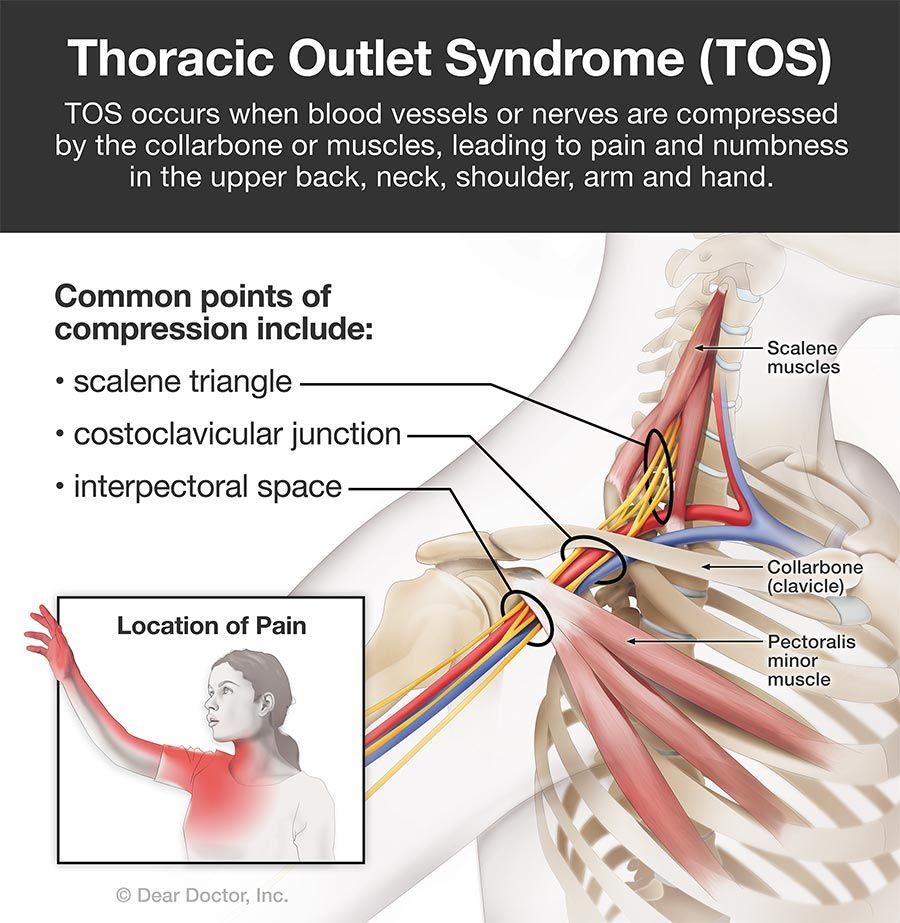
TOS can involve compression of two kinds of structures. Most often, it affects the brachial plexus, a network of nerves that runs from the neck through the shoulder region toward the arm. These nerves can be pinched by the collarbone, tight surrounding muscles or a cervical rib, which is an extra rib that some people are born with. Less often, TOS involves compression of the blood vessels that pass through the same area.
Along with tingling in the arms and hands, TOS may cause pain ranging from a dull ache to severe discomfort in the neck, shoulder, arm or hand. Arm weakness and numbness in the hand and fingers are also common, often most noticeable in the ring and little fingers. Gripping objects may become harder. When blood vessels are compressed, people may notice swelling, a bluish or pale color, or coldness in the arm or hand, and sometimes small dark spots under the fingernails. Sudden arm swelling, discoloration or a cold, painful hand can signal a blood vessel problem and should be evaluated by a medical provider right away.
How Thoracic Outlet Syndrome Is Diagnosed
TOS may be more common than many people realize, partly because it can be hard to pin down. Since both nerves and blood vessels can be involved, symptoms vary widely from one person to another. It is frequently mistaken for carpal tunnel syndrome. Blood vessel compression was once believed to cause most cases, but it is now understood that the large majority, an estimated 90% or more, involve compression of nerves.
Chiropractic Treatment for Thoracic Outlet Syndrome

After TOS has been identified, chiropractic care typically combines several approaches. These may include adjustments to the upper back (thoracic spine), stretching, manual trigger point therapy and other myofascial release techniques aimed at the involved muscles. Trigger point therapy and myofascial release involve finding tender, tight spots in muscle tissue and applying pressure with the fingers or a tool, gradually increasing it until the muscle relaxes and the tenderness eases.
Changes in daily habits also play an important role in recovery. Chiropractors commonly advise people with TOS to avoid carrying heavy loads and to reduce strain on the shoulders. That may mean limiting the use of heavy shoulder bags, briefcases and laptop bags whenever possible.
Why Consider Chiropractic Care for Thoracic Outlet Syndrome?
Chiropractic care for TOS aims to improve movement and balance in the spinal joints, particularly in the neck, and to address tension and imbalances in the shoulders, upper back and scalene muscles, which are deep muscles at the sides of the neck. Published case reports have described individuals whose long-standing TOS symptoms improved after chiropractic adjustments to the upper neck, though such reports involve single patients and results vary. For many people with TOS symptoms, chiropractic care may help relieve discomfort and reduce pressure on the brachial plexus. Anyone with these symptoms may want to discuss them with a chiropractor or other healthcare provider.